Links to official Saudi websites end with gov.sa
All links to official websites of government agencies in the Kingdom of Saudi Arabia end with .gov.sa
 Official government website of the Government of the Kingdom of Saudi Arabia

All links to official websites of government agencies in the Kingdom of Saudi Arabia end with .gov.sa

Secure websites in Saudi Arabia use HTTPS encryption


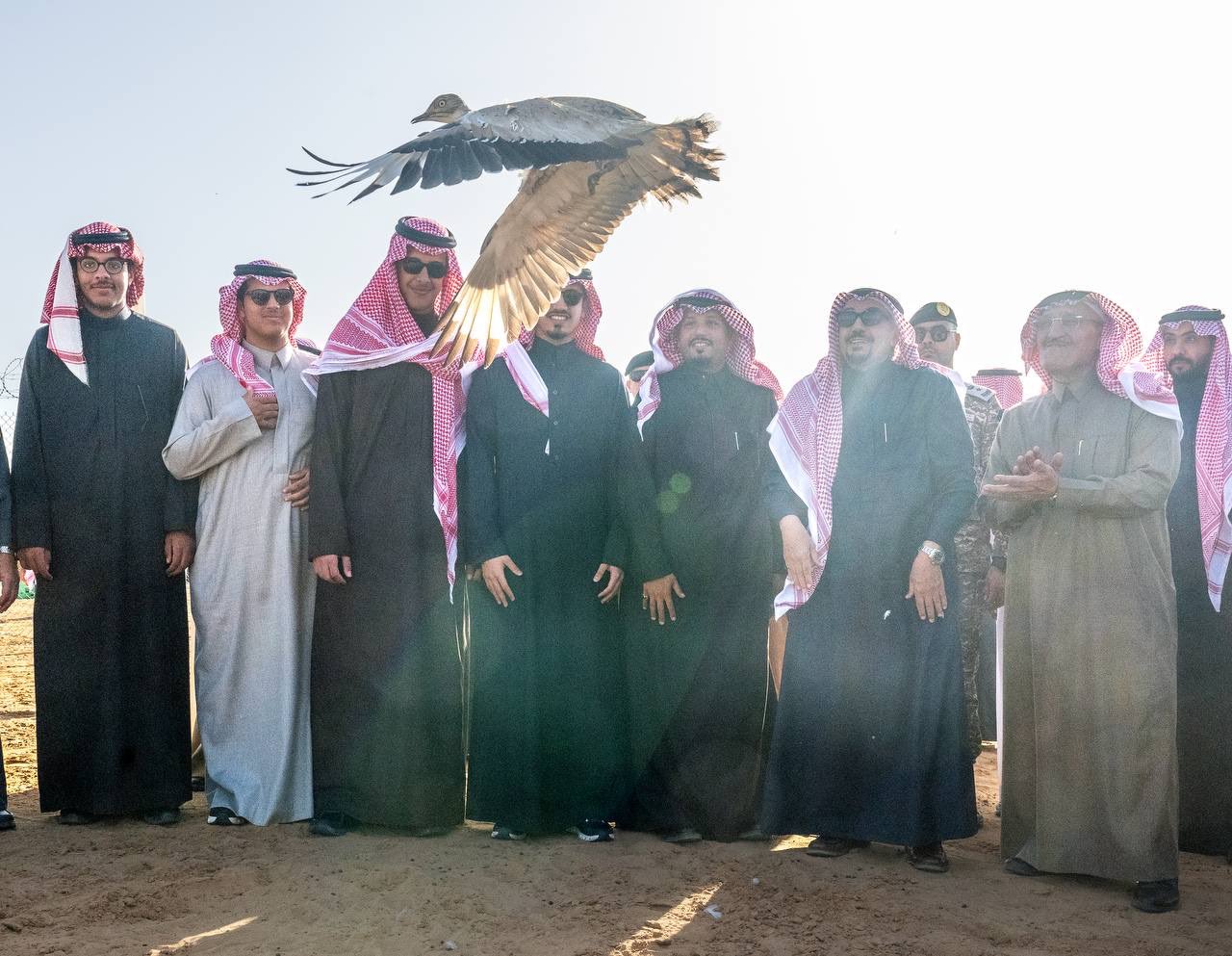
His Royal Highness Prince Dr. Faisal bin Mishaal bin Saud bin Abdulaziz, Governor of Qassim Region, released (20) houbara bustards into Qassim National Park, in the presence of His Royal Highness Prince Saud bin Faisal bin Mishaal bin Saud bin Abdulaziz, His Royal Highness Prince Bandar bin Mohammed bin Bandar bin Abdulaziz, His Royal Highness Prince Faisal bin Saud bin Faisal bin Mishaal bin Saud, and His Highness Prince Fahd bin Saad bin Abdulrahman bin Saad II bin Abdulrahman. This release is part of the National Center for Wildlife Development's programs to breed and reintroduce endangered wildlife species to nature reserves and national parks. Through collaboration with the National Center for Vegetation Development and Combating Desertification, the aim is to enhance biodiversity in Al-Qassim National Park and support its environmental and tourism assets. This collaboration also contributes to the implementation of national wildlife development plans undertaken by the Center, in line with Saudi Arabia's Green Initiatives and the objectives of Vision 2030. National parks serve as safe ecological corridors connecting protected areas, allowing wildlife to move and adapt within their natural habitats and promoting the long-term sustainability of ecosystems. His Royal Highness the Prince of Al-Qassim emphasized that enhancing biodiversity and developing wildlife in the region is a cornerstone of sustainable development. This is due to its vital role in maintaining natural balance, supporting ecosystems, and improving the efficiency of vegetation cover, which positively impacts the quality of life and the natural environment in the region. His Highness explained that initiatives to reintroduce wildlife, including the release of houbara bustards, contribute to restoring natural habitats, enhancing the sustainability of wildlife, and instilling environmental awareness in the community about the importance of protecting endangered species. He pointed out that the Qassim region possesses the natural environmental resources necessary to host such high-quality initiatives, which support national parks and nature reserves and strengthen their role as environmental and tourist centers. His Highness Prince Dr. Faisal bin Mishaal stated that integration among stakeholders in the environmental sector is a pivotal element in achieving the objectives of Saudi Arabia's Green Initiatives and contributing to building a healthy and balanced environment for future generations, in line with the goals of the Kingdom's Vision 2030 for environmental protection and the development of its natural resources. Dr. Mohammed Ali Qurban, CEO of the National Center for Wildlife Development, explained that releasing these types of wildlife contributes to enhancing environmental sustainability, enriching biodiversity, and supporting the Center's efforts in wildlife development. He noted that the release of houbara bustards in national parks is based on comprehensive scientific studies of biodiversity, aimed at assessing the short- and long-term environmental impact of these initiatives and ensuring their compliance with environmental sustainability requirements. He further explained that these efforts contribute to promoting ecotourism in the Kingdom and providing economic opportunities based on environmental sustainability, thereby maximizing the impact of the environmental sector and enhancing its contribution to social and economic development. It is worth mentioning that since its establishment, the National Center for Wildlife Development has been working to implement integrated plans and programs aimed at protecting wildlife, preserving biodiversity, and restoring ecosystems through comprehensive programs and specialized scientific research, in addition to monitoring and tracking biodiversity using modern technologies. The center is also keen to enhance cooperation and integration with relevant national bodies, and to activate community partnership, in order to embody the Kingdom’s national approach to protecting wildlife and sustaining its natural resources.
Was Page useful ?
No evaluations yet


